
Gold guide
How to Get the Most Money for Your Gold in Metro Detroit
Most people sell gold once or twice in their life. The person buying it does it fifty times a day. Here's how to close that gap.
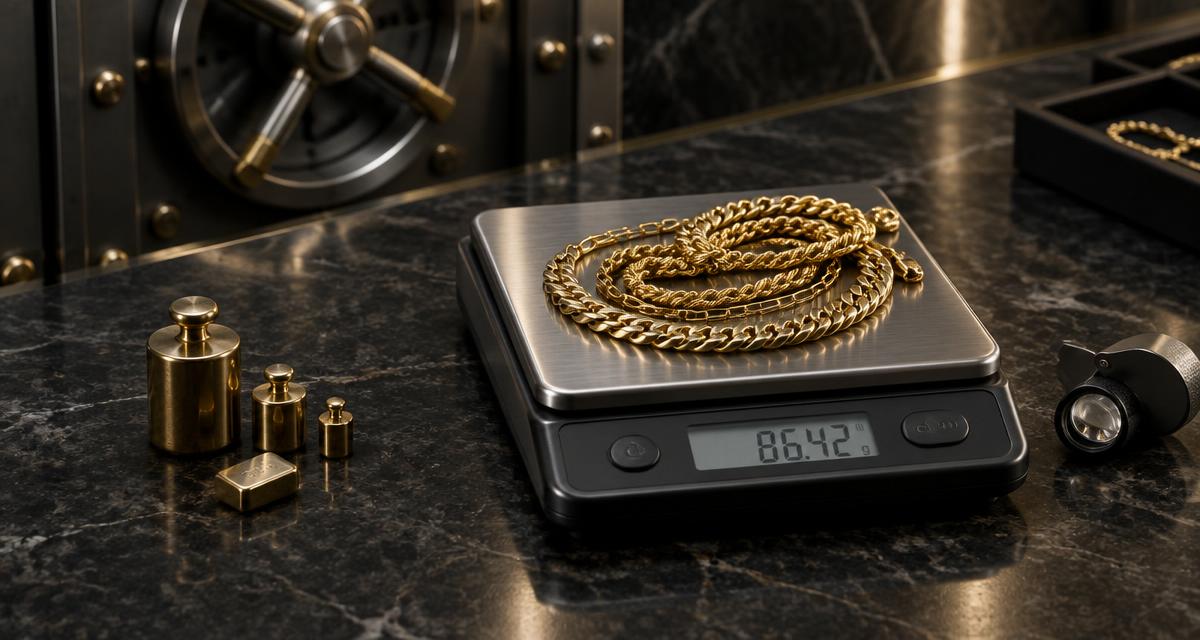
Most people sell gold once or twice in their life. The person buying it does it fifty times a day. That gap is where money gets lost — not usually through outright dishonesty, but because the seller doesn't know which questions to ask.
We've been buying gold at the same counter on West Warren Avenue since 1987. Here's how the math actually works, and what to do with it.
There are only three numbers that matter
What we're paying today
- 10KCall for today's price
- 14KCall for today's price
- 18KCall for today's price
- 22KCall for today's price
- 24KCall for today's price
Prices update daily. Final offer confirmed in store after testing and weighing.
Every legitimate gold offer in the world is built from three things:
- The weight, in grams (or pennyweights — 1 dwt = 1.555 grams).
- The purity, expressed as karat. 10K is 41.7% gold, 14K is 58.3%, 18K is 75%, 22K is 91.6%.
- The percentage of the gold market the buyer pays you.
That's it. A buyer weighs your gold, tests its purity, and multiplies by their rate. If someone can't or won't show you all three numbers, you're not getting a real offer — you're getting a guess dressed up as one.
What to do: Ask for all three. "What's the weight, what karat did it test, and what are you paying per gram at that karat?" Any honest buyer will answer without hesitating. We post our per-gram numbers publicly and update them daily.
Know what you actually have before you walk in
You don't need to be an expert, but five minutes with a magnifying glass will change the conversation.
Find the stamp. On a necklace or bracelet it's on the clasp or the little tag next to it. On a ring it's inside the band. Look for 10K, 14K, 18K, 417, 585, 750, or on overseas pieces 875 (21K) and 916 (22K).
Know the fakes. These stamps mean it is not solid gold: GF (gold filled), GP (gold plated), HGE (hydrostatic gold electroplate), RGP (rolled gold plate), and anything reading 1/20 12K. These contain a microscopic amount of gold and have essentially no melt value. A buyer who offers you scrap money for gold-filled is either mistaken or testing you.
Unstamped isn't worthless. Plenty of older American and European jewelry was never marked. It gets tested, not dismissed.
Weigh it yourself first
A $15 digital jewelry scale from any hardware store is accurate enough to keep everyone honest. Weigh your pieces at home, write the number down, and compare it to the buyer's scale.
Two things to watch for at the counter: the scale should be legal for trade (it'll have a state inspection sticker), and it should be turned so you can read it. If the display faces away from you, ask them to turn it. Everyone reputable will.
Don't let mixed karats get weighed as one lot
This is the single most common way people lose money, and it's easy to miss.
If you hand over a bag containing 10K, 14K and 18K pieces and the buyer dumps it all on the scale at once, they will almost certainly pay you the lowest karat rate for everything. On a 40-gram mixed lot, that difference can be hundreds of dollars.
What to do: Insist the lot is sorted by karat, tested by group, and weighed by group. We do this in front of every customer as standard practice — three separate piles, three separate weights, three separate numbers that add up to one total.
Never clean, polish or repair anything first
This one feels counterintuitive, so it's worth being blunt about.
- Polishing removes metal. Every pass with a polishing cloth or buffing wheel takes microscopic gold off the piece. You are literally throwing away what you're about to sell.
- Repairs cost more than they add. Fixing a clasp costs you $40 and adds maybe $6 of weight. Broken chains are paid by the gram exactly like intact ones.
- Cleaning destroys coin value. If any part of your lot is old coins, do not touch them. Cleaning a collectible coin can wipe out most of its premium permanently.
Bring it tangled, bent, broken and dirty. It's worth the same.
Bring everything — especially the stuff you think is junk
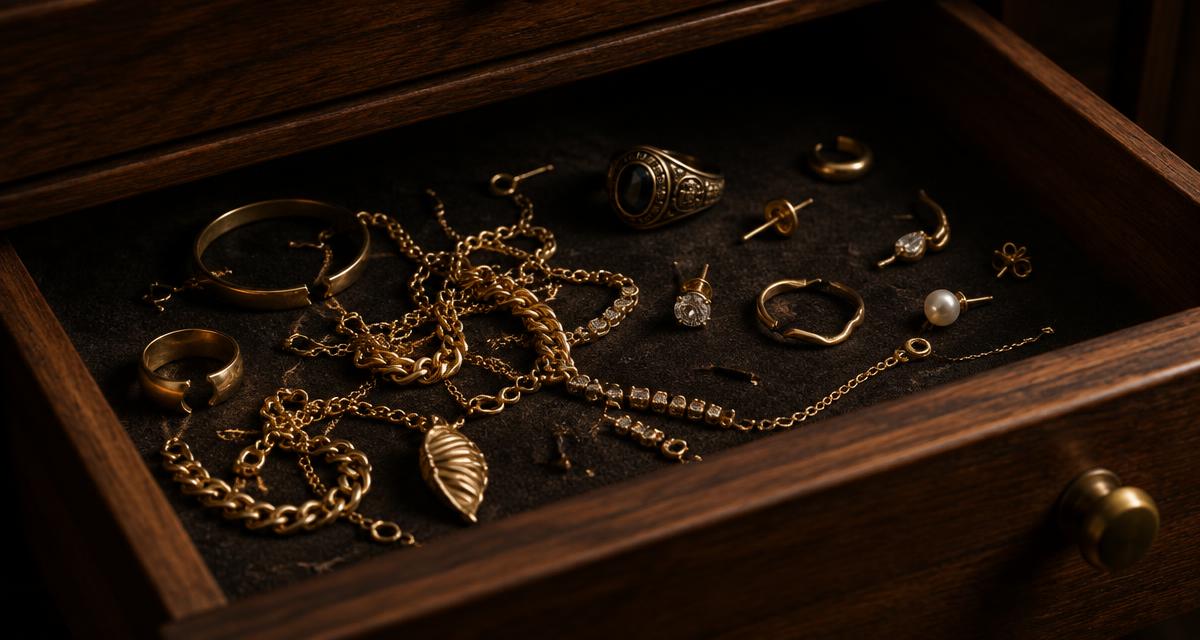
The bag in the back of the drawer is where the surprises live. Single earrings whose partners are long gone. Snapped chains. Class rings from a school you left in 1994. Dental gold. A pin with the stone missing. Old cufflinks.
Individually none of it looks like money. Weighed together it routinely comes to 30, 50, 80 grams. We've seen customers nearly leave a bag in the car because they assumed it was worthless, then walk out with four figures.
Get more than one offer — and bring the number with you
This is the fastest way to protect yourself, and any buyer confident in their pricing will encourage it.
Take your gold to two or three buyers. Get each offer in writing, with the weight and karat noted. Then bring the best one back to whoever you'd rather deal with.
We'll say this plainly: bring us a written offer from another Metro Detroit buyer and we'll do our best to beat it. That's not a slogan — it's just how a business that's been here since 1987 stays here.
Watch the pressure
The tells are consistent across every industry, and gold buying is no exception:
- "This offer is only good today." Gold moves a little day to day. It does not move enough to justify that sentence.
- Refusing to return your items while you "think about it." Your gold is yours. You can pick it up and walk out at any point, including mid-transaction.
- Testing in the back room. Everything should happen where you can see it. We test and weigh at the counter, always.
- Vague answers about the rate. "We pay top dollar" is not a number.
A word on the mail-in envelopes
You've seen the ads. You mail your gold in a prepaid envelope and they mail you a check.
The structural problem is that once your gold is in their hands and out of your sight, you have zero leverage. You can't see the scale. You can't see the test. If the check is lower than you hoped, your options are to accept it or ask for the gold back and hope it comes. Their advertised rates also tend to be well below what a local buyer standing in front of you will pay.
Sell where you can watch it happen.
Pawn instead if you might want it back
Not everything should be sold. If the piece is your mother's ring, or you just need to get to the fifteenth, a pawn loan gets you cash today and keeps the item yours. It goes in the vault, you repay, you get it back. No credit check, no credit reporting, and if you decide not to redeem it, nothing happens to your credit — the item simply becomes ours.
For gold specifically this works well, because the value is objective and easy for both sides to agree on.
Timing: is it worth waiting for a better gold price?
Honest answer: usually not.
Gold moves on global events nobody can reliably predict. Waiting three months for a 2% rise means going three months without the money, and it might just as easily drop 4%. If you need the cash now, sell now. If you genuinely don't, and you want to watch the market for a while, that's a legitimate choice — just don't let a buyer talk you into urgency, or into waiting.
What to bring with you
- Your gold, unsorted and uncleaned, including the broken bits
- A valid state ID (required by Michigan law for every purchase and pawn)
- Any written offers from other buyers
- Receipts, appraisals, certificates or boxes if you happen to have them — they can raise an offer, but nothing is required
The short version
Know the stamp. Weigh it yourself. Make them sort by karat. Don't polish anything. Bring the junk drawer. Get a second offer in writing. Watch the scale.
Do those seven things and you'll get close to the most anyone will pay you — here or anywhere else.
What we buy that's mentioned here
Keep reading
Gold7 min read
What Is Scrap Gold Actually Worth? A Straight Answer
"Scrap gold" sounds like an insult. It isn't — and broken gold is worth exactly the same per gram as unbroken gold.
Read the guide →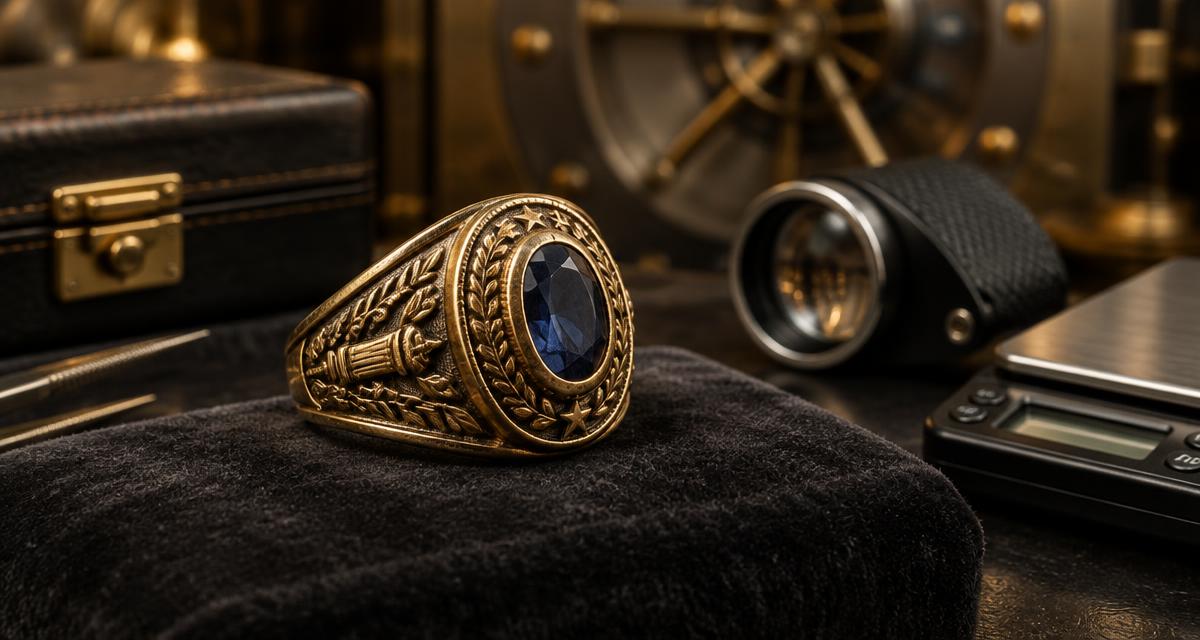
Gold6 min read
What Is My Class Ring Worth? (And Should You Sell It?)
It's in a drawer and you haven't worn it in years — but a class ring is one of the heaviest pieces of gold most people own.
Read the guide →Jewelry6 min read
Inherited Jewelry, Coins or Tools? How to Get Cash Fast in Westland
A practical way to sort inherited valuables, understand a cash offer, and choose the right outlet for the rest of a household.
Read the guide →