
Gold guide
What Is My Class Ring Worth? (And Should You Sell It?)
It's in a drawer and you haven't worn it in years — but a class ring is one of the heaviest pieces of gold most people own.
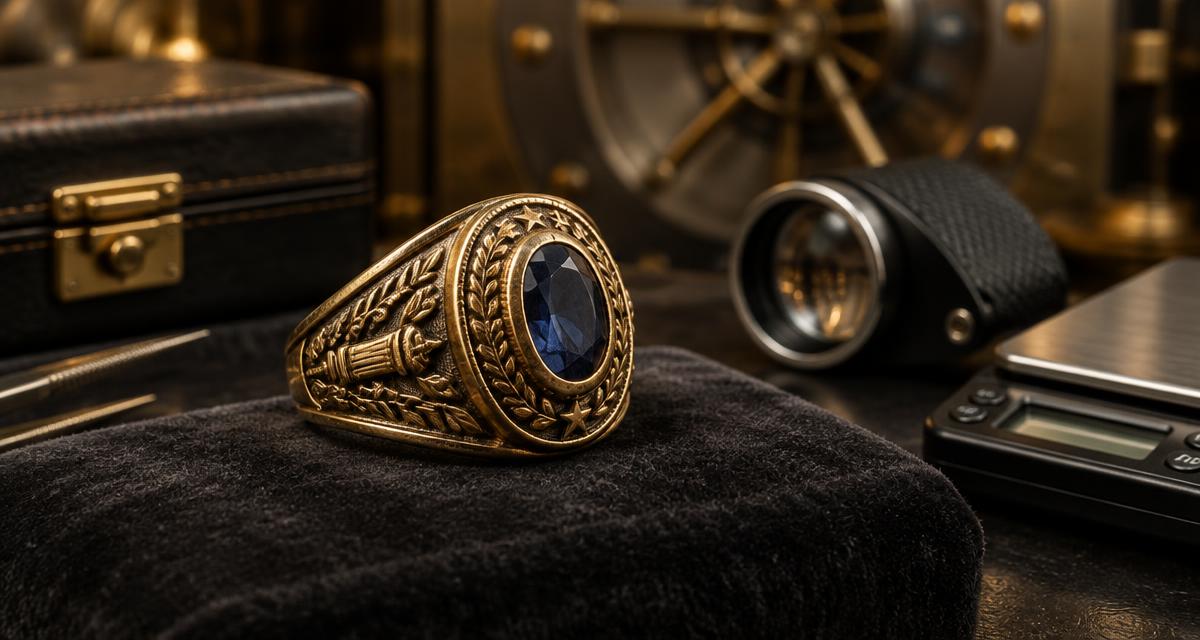
It's in a drawer. You haven't worn it since the year you got it. The school colors don't mean much anymore and the stone is a synthetic.
Here's the thing people miss: a class ring is one of the heaviest pieces of gold most people own. Jewelers built them thick because they were meant to last, and that thickness is money.
What class rings are actually made of
What we're paying today
- 10KCall for today's price
- 14KCall for today's price
- 18KCall for today's price
- 22KCall for today's price
- 24KCall for today's price
Prices update daily. Final offer confirmed in store after testing and weighing.
Almost all American class rings from Jostens, Balfour, ArtCarved, Herff Jones and Gold Lance are 10K or 14K solid gold. Some are sterling silver, some are the cheaper "white lustrium" or "valadium" alloys, and a few premium ones are 18K.
Check inside the band. You're looking for:
- 10K / 417 — the most common by far
- 14K / 585 — better rings, heavier payout
- 18K / 750 — less common, worth noticeably more
- 925 / STERLING — silver, still worth something but much less
- Lustrium, Valadium, Siladium — no precious metal content
The maker's name is usually stamped right alongside it.
The weight is the whole story
Class rings are heavy because they're solid, wide-shanked and have a big raised top. Real numbers:
- Men's 10K class ring: typically 8–18 grams
- Women's 10K class ring: typically 4–9 grams
- Heavy men's 14K ring: 12–20 grams, occasionally more
For comparison, a plain ladies' wedding band is often 1–3 grams. A single men's class ring can hold five to ten times the gold of a modern band.
At current gold levels, a heavy men's 10K class ring is a meaningful amount of cash — considerably more than most people assume when they find it in a drawer.
The stone is (almost always) worth nothing
This is the part that surprises people.
The big colored stone in a class ring is nearly always synthetic — a lab-made spinel or corundum in the school color. They cost the manufacturer a couple of dollars. They have no resale value.
There's no reason to be disappointed by this. It just means the value is in the gold, and the gold is substantial. We deduct the stone's weight when we weigh the ring, which is a small adjustment, and pay on the metal.
The rare exception: a handful of older or premium rings were set with genuine stones. We check rather than assume.
Does the school or year matter?
Not to the gold value, no. A 1978 ring from a school in Livonia and a 2011 ring from a school in Canton are worth the same if they weigh the same and test the same karat.
There's a very small collector market for rings from famous institutions, military academies, or championship years — but it's narrow, and for the overwhelming majority of class rings, the gold is the value.
Your name engraved inside doesn't reduce it either.
"Should I sell it? It's sentimental."
That's a real question and it deserves a real answer rather than a sales pitch.
Some honest considerations:
If you haven't worn it in ten years, you probably won't. Most class rings live in drawers permanently.
A photograph keeps the memory. Several of our customers photograph the ring before selling. The memory isn't in the metal.
If you're not sure — pawn it instead. A pawn loan gets you cash now and the ring stays yours. You repay, you get it back. If you find you don't miss it, you simply don't redeem it and you've effectively sold it after a trial period. No credit check, no credit impact either way.
If it belonged to someone who's gone, take your time. There's no deadline, and we'd rather you were sure.
What about a whole box of family rings?
Inherited jewelry boxes routinely contain three or four class rings from different generations, plus wedding bands, signet rings and odd pieces.
Bring the whole box. Each ring is tested and weighed separately by karat, you get a number for each, and you decide what to sell and what to keep. Plenty of people sell three rings and keep one.
There's no minimum and no pressure to sell the lot.
How to get the most for it
- Don't polish it. Polishing removes gold. It changes nothing about what we pay.
- Don't remove the stone. You'll damage the setting and the stone is worthless anyway.
- Bring it with the rest of the drawer. More weight in one visit, one total.
- Check the stamp so you know roughly what to expect walking in.
- Ask for the per-gram rate at its karat — not a lump-sum "we'll give you X for the ring."
- Get a second offer if the ring is heavy. Any confident buyer will encourage it.
What you need to bring
- The ring
- A valid state ID — Michigan law requires it for every purchase and every pawn
- That's it
Testing, weighing and appraisal are free, take a few minutes, and happen at the counter where you can watch.
What we buy that's mentioned here
Keep reading
Gold8 min read
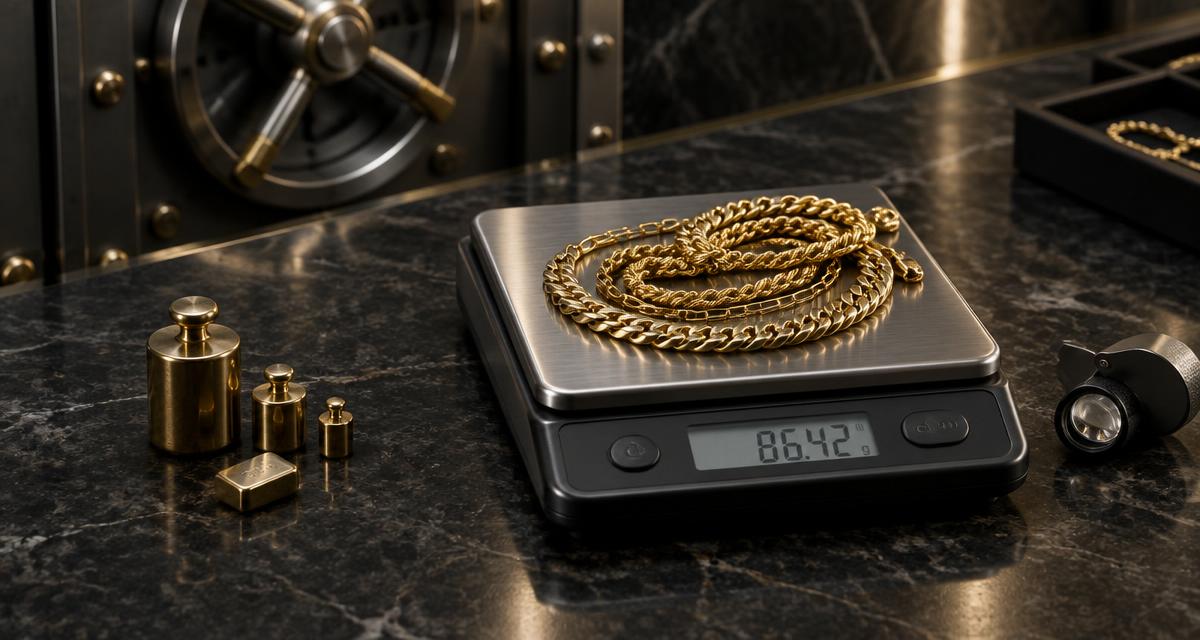
How to Get the Most Money for Your Gold in Metro Detroit
Most people sell gold once or twice in their life. The person buying it does it fifty times a day. Here's how to close that gap.
Read the guide →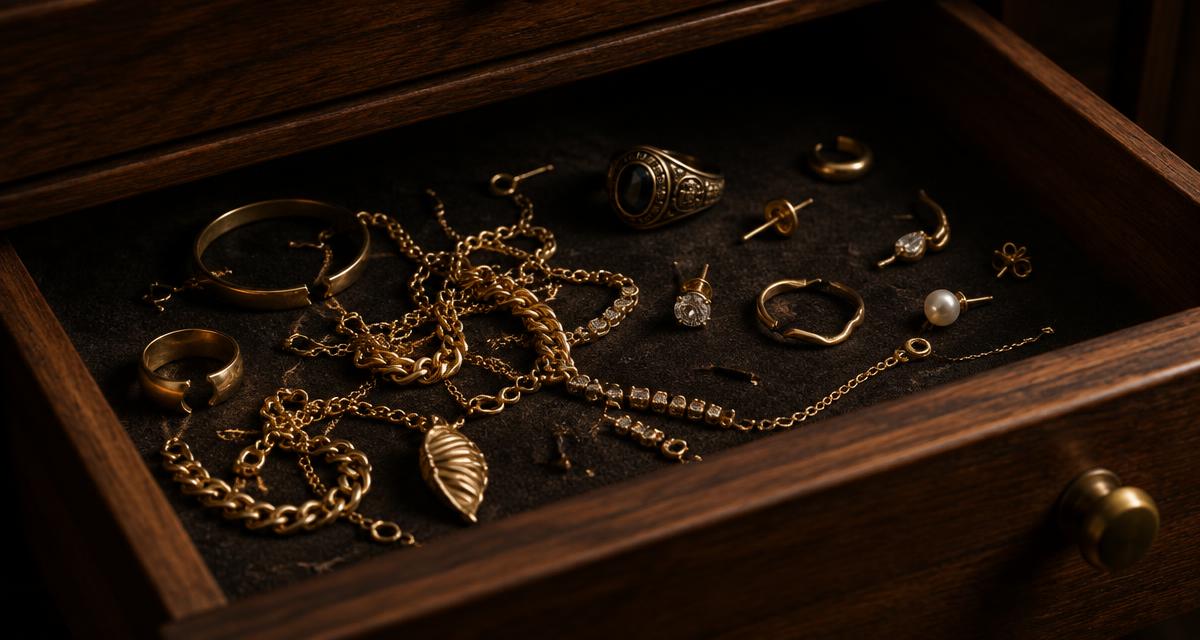
Gold7 min read
What Is Scrap Gold Actually Worth? A Straight Answer
"Scrap gold" sounds like an insult. It isn't — and broken gold is worth exactly the same per gram as unbroken gold.
Read the guide →Jewelry6 min read
Inherited Jewelry, Coins or Tools? How to Get Cash Fast in Westland
A practical way to sort inherited valuables, understand a cash offer, and choose the right outlet for the rest of a household.
Read the guide →